Why bother having prep procedures?

Or, “why bother writing an article like my A tuneable method for placing treasure in BX?”.

In response to the article linked above, /u/deejax313 said:

“Alot of work to go through for a game.

Cant DMs just give treasure, get a sense of how fast the players are advancing, and then give more or less treasure based on how fast they like the players to advance?

You may as well just not play with XP and just say characters advance a level every three adventures.

You’re crunching numbers and working backwards to create a system to make a totally subjective choice happen.”

A good question. I have answers.

Continue reading “Why bother having prep procedures?”

A tuneable method for placing treasure in BX

There doesn’t seem to be clear agreement on how fast BX/Moldvay PCs should advance, but it’s clear that many people are unhappy with the rate of advancement that results. It tends to be far too slow, at least for busy adults who manage a three-hour session maybe twice a month. (See e.g. Becker’s general critique here and here, and a recent Reddit post on the meagre spoils of In Search of the Unknown).

I’m working on some adventures that I plan to publish, and I plan to stat them for BX because (as Patrick Stuart recently argued) BX seems to be the most-used system in the parts of the OSR I care about. There are often complaints about adventures supposedly statted for BX that they are far too light on treasure (see many of Bryce Lynch’s reviews).

I don’t want to use the standard treasure tables because (a) I’m using mostly custom creatures, (b) there’s controversy about how good they are, and in any case (c) I want to make a tool that we can all use to tune the rate of PC advancement without giving up on xp-for-gold as an incentive.

So, I have made a spreadsheet (Google Sheets version, Excel version), and explained how it works below. Unless noted, I’m getting any specific numbers from the Old School Essentials Rules Tome.

Continue reading “A tuneable method for placing treasure in BX”

My session prep checklist

I have made a checklist for session prep (Word version). I haven’t used it much yet, but my hope it is that will do two things for me:

  1. Remind me to check things I tend to do badly. E.g. I am bad at giving out any treasure at all, even in games that need it and have guidance about it
  2. Give me ideas to try when I’m happy with my basic prep but want to improve it more

Because there is so much of the latter, I’ve split it into two parts (levels 2 and 3), with the second part containing things that are less important, more advanced. They’re the kind of thing I’d spend time on for a published adventure, but usually wouldn’t for a single session.

This checklist is explicitly for me, and only contains things that I have problems with and things I don’t always think to do. You’ll notice level 1 is missing a lot of basic activities. This is because I find them easy and natural (or don’t give a fuck about them, so don’t do them).

This list is not meant to help a rank beginner do this well. They would probably want something different, something more basic. And, as usual for checklists and processes, it’s no substitute for expertise — it just gives you reminders to use the expertise you have.

Question for the crowd — Does anyone else have an analogous list, in that it’s specific to you, that it only includes things you don’t instinctively do? What’s on it? How do you organise it?

Related question — What do you tend to miss when doing session prep? What do you do to remind yourself?
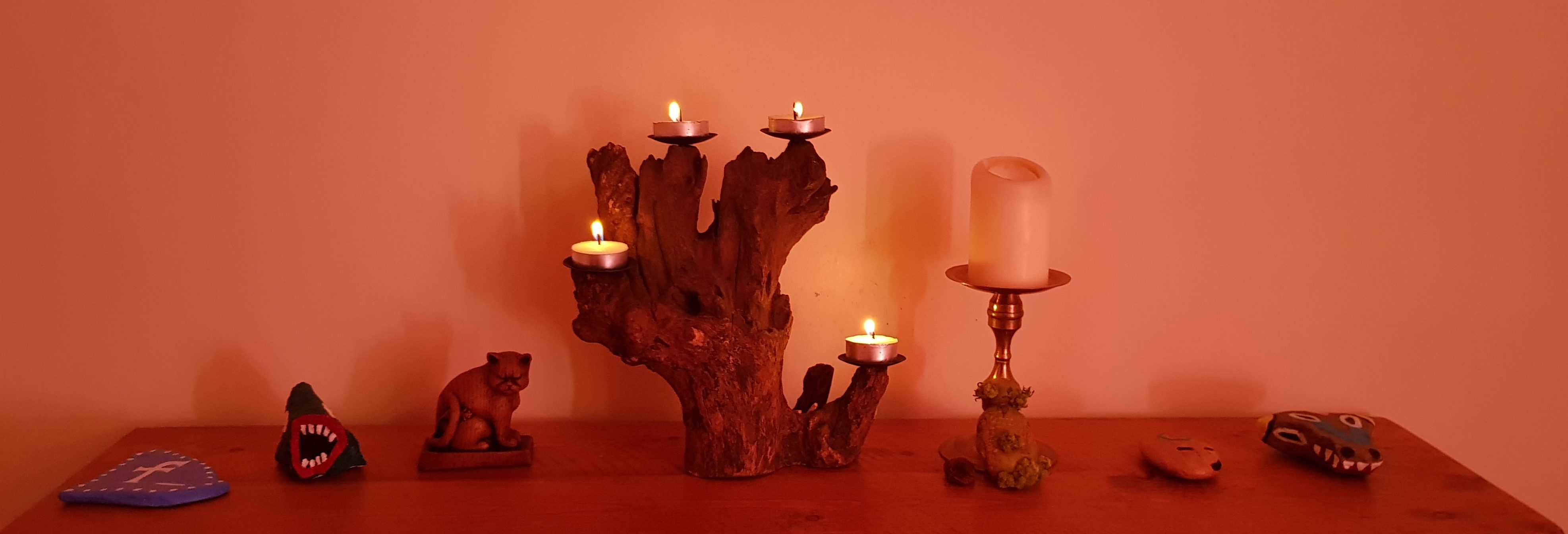
Three things, Christmas Eve 2019

Landmark, hidden, secret — a classification scheme for information in game situations that might help us better decide what to tell players, and when — https://diyanddragons.blogspot.com/2019/10/landmark-hidden-secret.html

Michael Prescott explains why you probably don’t need to use the OGL, and probably would be unwise to use the DM’s Guild or similar DriveThruRPG programs. “… That last one is so mind-bendingly overreaching that it’s comical. You’re giving them permission to negotiate for you, with themselves. It’s like the devil wrote it.”http://blog.trilemma.com/2019/10/compatible-with-dungeons-dragons.html

It looks like real-world archery is much harder at range than typical rpg archery. Given that long-range missile fire is hard to make fun, it might be worth trying some harsher range modifiers — https://deltasdnd.blogspot.com/2011/03/basic-d-on-archery.html

Three things, mid-December 2019

Justin Alexander has a good article on why GMs shouldn’t fudge rules and die rolls — https://thealexandrian.net/wordpress/43708/roleplaying-games/gm-dont-list-9-fudging. He doesn’t mention that fudging subtly corrupts you, giving you a sordid aura and making you more likely to do murders, but I presume we all know that by now.

Alexander also has a has a plausible conjecture for why most realm/business/tavern management etc subsystems fail — because they tend to be closed systems, rather than integrating naturally with the main loop of the game — https://twitter.com/hexcrawl/status/1185260871062183936?s=09

Finally, Patrick Stuart has been looking at the OSR-space and has concluded that BX/Moldvay D&D is the common language that makes most of it work — http://falsemachine.blogspot.com/2019/11/the-bx-commons.html. This aligns with my experience — I see reddit and blog posts by people playing OD&D, but they’re rarely the people who are writing things I’m interested in. And I don’t see much about Holmes, Mentzer or AD&D at all.

Collected advice on adventure design

I am writing some OSR-type D&D adventures that I intend to publish, so I have gone looking for advice on doing that. Below, I have collected links. I have also included some summaries, but honestly in the eyes of posterity they are more for my benefit in writing them than for you in reading them.

How I Write an Adventure, by Arnold K

https://goblinpunch.blogspot.com/2017/01/how-i-write-adventure.html

That’s prosaic, principled, but realistic — I can believe he actually works like that. My summary:

  • Write ten adventures at once, gathering and filing ideas as they come to you
  • Run them early — that will give you ideas and show you problems
  • Have a (short) list of themes, be strict about cutting stuff that doesn’t fit
  • Don’t commit to anything until late on, especially not to a specific map
  • Focus on making interesting snippets – you can integrate them later
  • Iterate your design, culling weak (or unthematic) bits ruthlessly

How I Make an Adventure by Patrick Stuart

Continue reading “Collected advice on adventure design”

How I GM and how to play in my games

People have asked me how I GM. People have asked me how to play in my games. By a kind of ontological fusion, this document answers the questions of both groups. It’s amazing.

There is no “plot”, and we are intense

The heart of my method is improvising — I am making this shit up as we go along. That’s my default position. My default model of “run a game session” is that I have no plan or knowledge of what will happen. The players could do anything and it might seem reasonable for anything to happen. That is where I start from, and any prep work I do to is to support that. This is probably the key to my success.

There is thus no “plot”, ever. You are free. But that comes with responsibility — as a player you must make the game work. Good drama has ongoing themes, good drama goes somewhere. So you need to have direction, to be going somewhere, and to stick with that at least some of the time. You need to try to change the world, or at least try to change your position in it.

Example If you start out looking for your brother, you should keep looking for him until you have good reason to give up.

Side-jaunts are not a problem, just so long as you get back on track eventually. But my runs are usually short — 10–12 sessions is typical — so “eventually” is quite soon.

Continue reading “How I GM and how to play in my games”

Three interesting things I have read, late October 2019

Paul Beakly on improvised game design:

Basically if you’re ever creating a system of resolutions that orbit an outcome, rather than directly resolving the outcome itself, that’s improvised game design.


Two interesting videos on medieval lighting technology:

  • A broad overview by Shad M Brook introduces the idea of “rush lights”, the pith from meadow rushes that’s been soaked in tallow. I’d never heard of these before, but apparently there were the best light source most peasants could get.
  • Jason Kingsley tries to make rush lights, and shows that it was harder than I assumed after the brief description in the other video.

James Introcaso says We Can Do Better Than Boxed Text. And he’s right.


Three interesting things I’ve read recently, mid-September 2019

An astute observation from Kyle Maxwell’s review of Dirge of Urazya:

A twenty-four page zine by an independent author will never provide as much detail as an encylopedic tome from a large corporate producer. But I’m not sure the additional detail in those larger books actually gets used in games. … Setting material like [Dirge of Urazya] leans into that idea and gives the players – all of them – both the encouragement and the tools to customize it, rather than present lots of “canon lore” and then a vague statement about feeling free to “change it if you want”.

Patrick Stuart has started a discussion on his blog with the question “What do you think of art in games?”. As you might expect from his circle, the quality of the replies is excellent, with lots of clever, creative people scrabbling around trying to make sense of their heads.

Paul Beakley has advice on how to use clocks in Blades in the Dark and descendants. He starts by talking about the problems he had before he knew how do that:

Every time they rolled anything less than a 6, I’d load ‘em up with consequences. I had no place to put consequences other than the characters or the fiction, and the whole thing ended up looking more like a game of Fiasco than smooth Ocean’s 11 style criming. The reason of course is that you need clocks as a place to put consequences other than the characters and the fiction.

I particularly like how he talks about “places[s] to put consequences” — consequences are, of course, a type of currency, and they need to be accounted for. If you’re generating too many (or too few) for the sinks available, you’re going to have problems. Put another way — I understood after reading this that there are, give-or-take, “consequence points”, and the Blades mechanics only work well if the maths for those points is right.